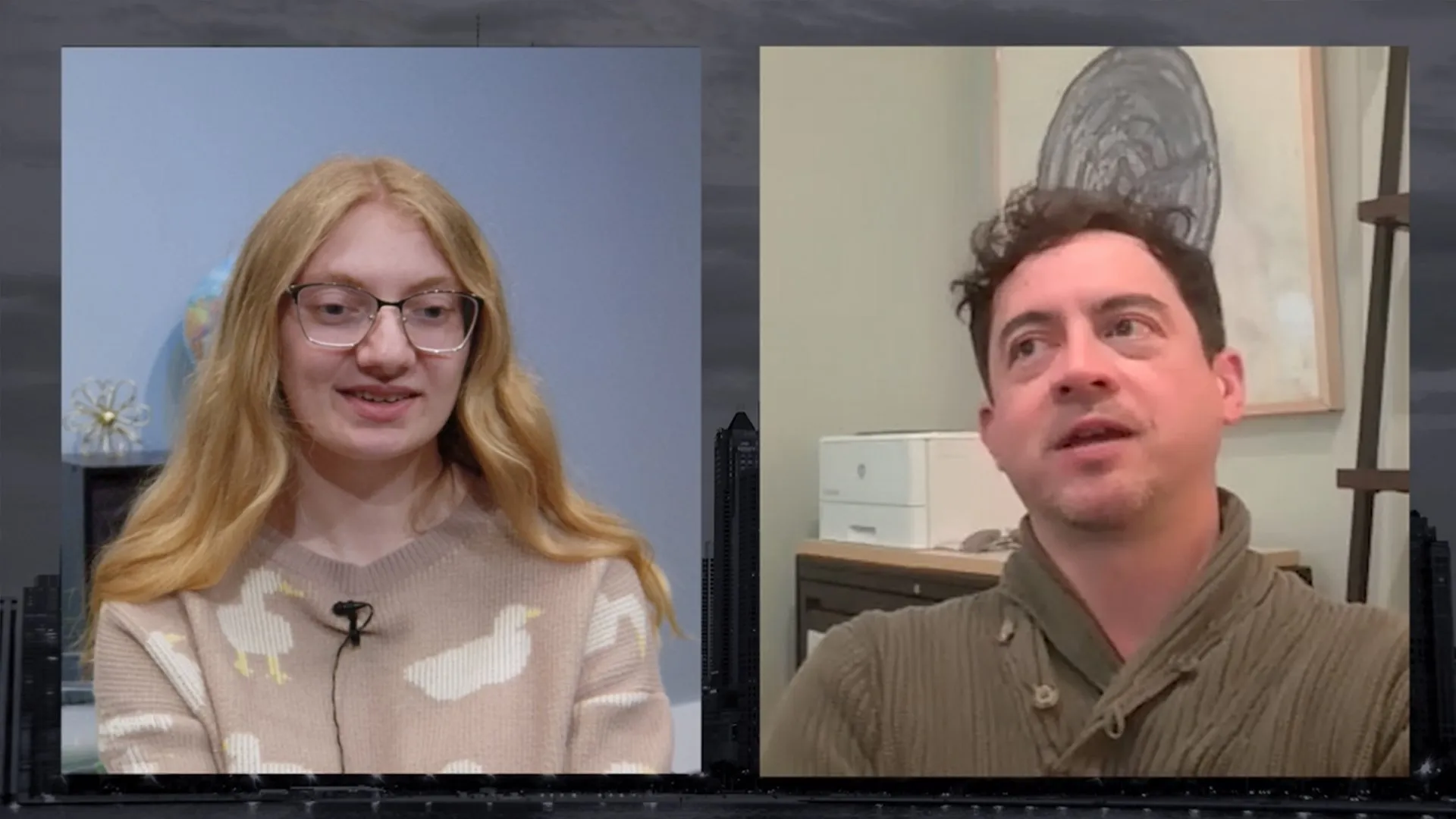
As the senior director of programs, White explained that Illinois Humanities has spent more than 50 years serving as the state partner for the National Endowment for the Humanities. The organization focuses on three major areas: providing free public programming across Illinois, offering educational opportunities, and investing in communities through humanities grants.
At its core, Illinois Humanities is centered around helping people better understand the human experience through culture, storytelling, history, literature, and conversation. White described the humanities as an opportunity for people to slow down, reflect, and connect in meaningful ways.
Throughout the conversation, White emphasized that the humanities play an especially important role in modern society because of how fast-paced and technology-centered daily life has become. While people are constantly absorbing information through social media, artificial intelligence, and endless streams of digital content, Illinois Humanities encourages communities to gather together and think more deeply about the world around them.
White described the humanities as a form of “activated intelligence,” where people actively engage with each other through discussion, reflection, and shared experiences. Whether it is talking about a film long after the credits roll or discussing local history with neighbors, those conversations help create understanding and strengthen communities.
The discussion also touched on the role humanities play in democracy. White explained that healthy communities require more than elections and political debates. They also need spaces where people can listen to each other, challenge ideas respectfully, and better understand differing perspectives. Programs like Community Conversations are designed to create those opportunities for dialogue throughout Illinois.
Another major focus of Illinois Humanities is accessibility. White explained that all of the organization’s programs are free because the humanities should be available to everyone, regardless of where they live or their financial situation. While larger cities often have easy access to museums, universities, and cultural events, Illinois Humanities intentionally works to bring programming into rural and underserved communities across the state.
White highlighted partnerships with local libraries, museums, and organizations throughout Illinois, including collaborations with communities in northwestern Illinois. By working directly with local partners, Illinois Humanities ensures programs reflect the interests and stories that matter most to each region.
One program White discussed in detail was the Odyssey Project, which offers free humanities college courses to adults who may not otherwise have access to higher education. Participants can even earn transferable college credit through the program.
The organization also reaches younger audiences through the Gwendolyn Brooks Youth Poetry Awards, a statewide poetry competition open to students from kindergarten through 12th grade. The annual contest honors former Illinois Poet Laureate Gwendolyn Brooks while encouraging students to express themselves creatively through writing.
One of the most memorable stories White shared came from a southern Illinois symposium called Confluences. The event brought together residents, students, educators, and visitors from across the state to explore the history and culture of southern Illinois communities along the Mississippi and Ohio rivers.
The gathering evolved into something larger than a conference. It became a celebration of shared identity, local history, and storytelling. White described how people from different generations and backgrounds connected through conversations about family, geography, music, and the region’s history. For many attendees, it challenged misconceptions about rural Illinois while creating new appreciation for communities they had never visited before.
White explained that these moments of connection are exactly what Illinois Humanities hopes to create — spaces where people can share perspectives, discover common ground, and better understand both their differences and similarities.
Looking toward the future, White said he is excited about building a stronger statewide humanities network that connects organizations, libraries, museums, artists, and communities throughout Illinois. He hopes the organization can continue strengthening relationships between rural and urban communities while amplifying the cultural stories that make Illinois unique.
The conversation also highlighted Illinois’ ongoing America 250 initiatives ahead of the nation’s 250th anniversary. Through programs like Illinois Voices 250, residents across all 102 counties are being invited to record conversations and personal stories that will eventually be archived at the Library of Congress.
Listeners interested in learning more about Illinois Humanities, upcoming programs, grants, or statewide events can visit Illinois Humanities or Illinois 250.
As the episode wrapped up, White reflected on the importance of understanding Illinois as a collection of diverse communities with unique stories worth celebrating. Through conversation, storytelling, and shared experiences, Illinois Humanities continues working to bring people together across the state.
Along the Rock is produced by the Radar Free Press. The Radar Free Press is free to the public and relies on community support through likes, shares, and comments.
If you have any questions for recurring guests or episode ideas, please email us at alongtherock@theradar.online.