
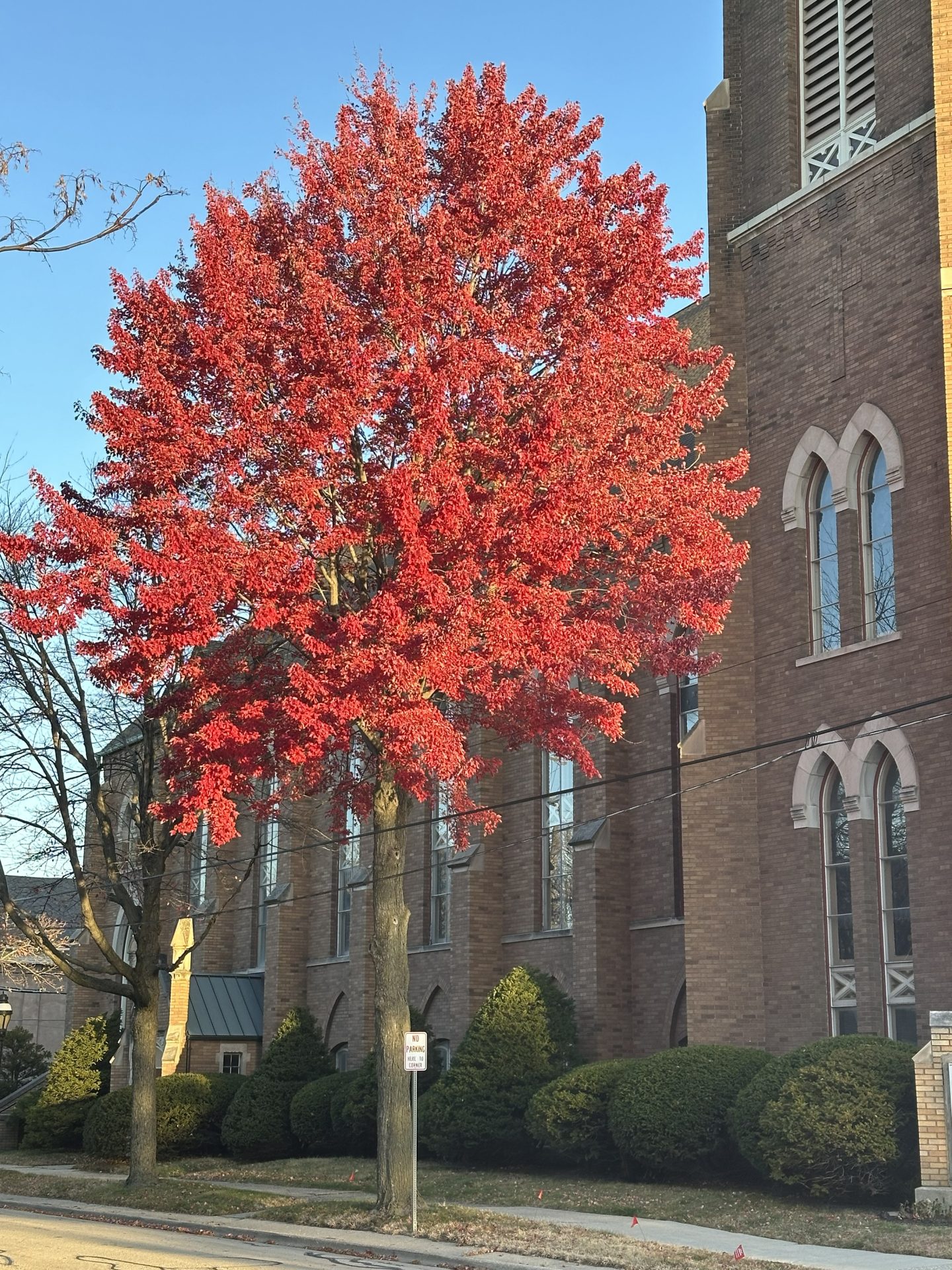
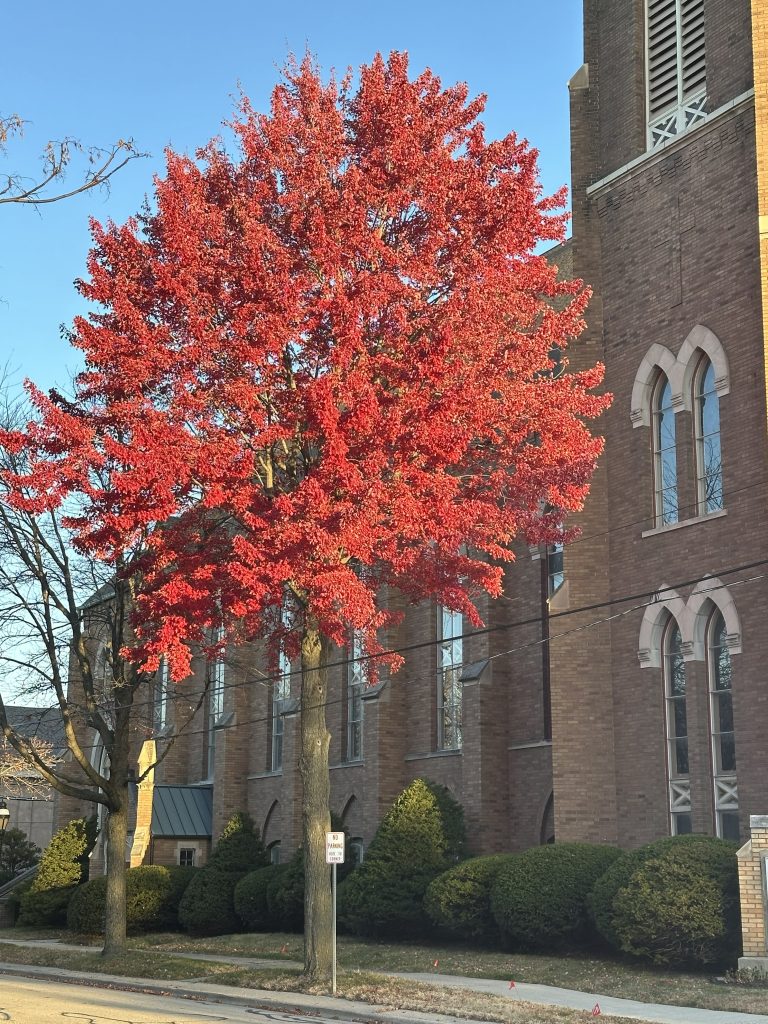
This Red Maple Legacy Tree was nominated by Mike Mollway, the Sexton/Building Manager of First Lutheran Church. He said, “I’ve been admiring this tree for a long time and have taken several photos of it over the years incorporating the church steeple as a backdrop. I’m a lifelong member of the church and I’ve enjoyed watching this tree turn into the fiery red colors for as long as I can remember. It’s always been a very healthy and straight tree.”
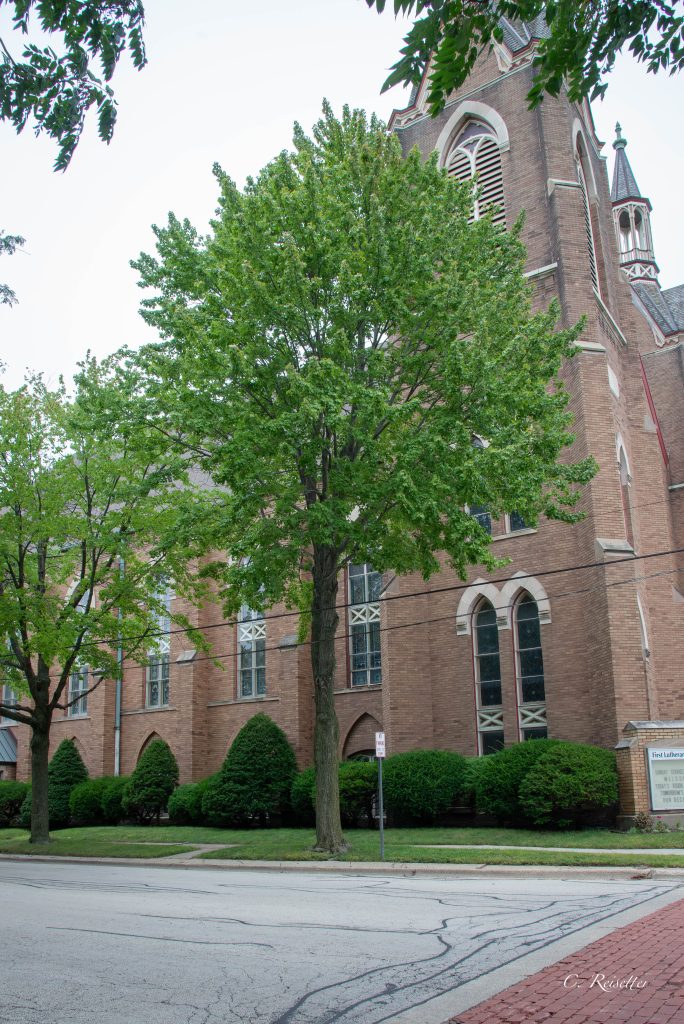
“Each fall, this Red Maple growing in the tight boulevard space on Oak Street next to the beautiful First Lutheran Church, flames with exceptional red fall color,” says Alan Branhagen, Executive Director of Natural Land Institute. He goes on to say, “The tree is usually late to color up, starting its show in late October and continuing into early November before its leaves finally drop.” Red Maples are renowned for their fall color, but trees may have yellow, orange or red fall color and blends thereof. This Red Maple was planted along with four others along Oak Street after Dutch Elm Disease killed the elms that used to line this street.
Red Maple is not locally native, but regionally native – found growing wild just to our north, east and well to our south! This Legacy Tree Red Maple is a standout – its four other neighbors not nearly as colorful nor as healthy.
This tree is a true legacy, thriving in its harsh planting location between street and sidewalk and rewarding passersby with its brilliant red fall color every autumn. “Most Red Maples planted in our area are clones or cultivars selected for their fall color, but not for their long-term adaptability to our region. This tree is a seed grown plant and proven its adaptability to our local soils and climate,” says Branhagen.
Red Maples bloom in early spring before the leaves emerge – flowers are red to orange or golden yellow – usually predicting what the fall color of a tree will be. Trees are usually male or female: producing male flowers full of pollen and nectar or female flowers with nectar. Some trees will have both male and female flowers. Female flowers, after pollination by grateful hungry spring bees and other pollinators, produce the winged “helicopter” seeds botanically known as samaras. These seeds whirl away on the wind when ripe to hopefully grow a new tree where they finally land. The seeds are eaten by all sorts of chipmunks and squirrels and some birds. Like all native maples, it is a high wildlife value tree.
The summer foliage of Red Maple is dark green above and silvery underneath. The twigs are often reddish but older stems and young branches are smooth gray, maturing to rough gray charcoal colored as they age. The tree is closely related to the locally abundant Silver Maple and they can hybridize to produce the Freeman Maple (Acer x freemanii). Red Maples don’t grow as large, nor as quickly as Silver Maples so are usually considered a better garden tree though they do have surface roots and deep shade that shade-loving ferns and wildflowers may thrive in, but turfgrass does not.
Background Information:
Natural Land Institute launched the Legacy Tree Program in January 2024. Anyone may nominate a tree on private or public land from NLI’s 12 county region. To see monthly stories, for more information and a nomination form visit: https://www.naturalland.org/nlis-legacy-tree-program-january or call 815-964-6666.
NLI, an accredited land trust, is a 501(c)3, not-for-profit land conservation organization based in Rockford, IL and has protected 19,000 acres of natural land in Illinois since 1958. NLI’s mission is to create an enduring legacy of natural land in northern Illinois for people, plants and animals. For more information and to donate visit: www.NaturalLand.org.


