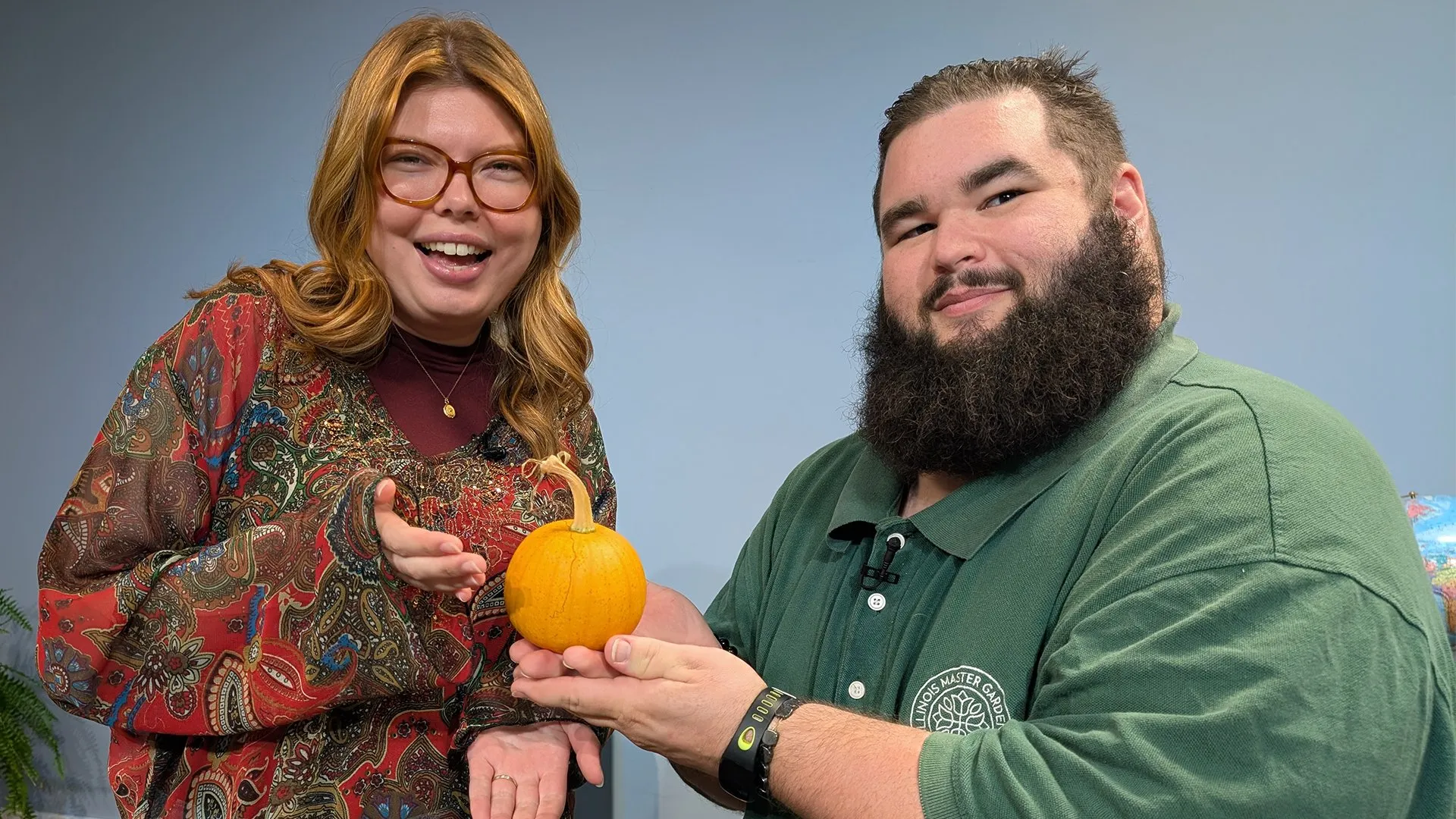
On this episode of Along the Rock, host Kierstyn Long welcomes Bruce J. Black from Illinois Extension to explore the surprising ways apples, herbs, and pumpkins have shaped Halloween traditions, along with an upcoming community event that turns pumpkin smashing into an environmental learning experience.
Apples, Folklore and Halloween Traditions
Apples have long been associated with Halloween, from the familiar tradition of bobbing for apples to historical beliefs about romance and fortune-telling.
Before candy became a popular Halloween treat, apples were sometimes handed out to trick-or-treaters. Their connection to Halloween also inspired the tradition of bobbing for apples, which became a popular seasonal activity because apples naturally float in water.
During the Victorian era, apples were even associated with predicting future romantic partners. One tradition involved placing an apple beneath a pillow on Halloween night in the hope of dreaming about a future sweetheart. Another version suggested that brushing one’s hair three times while eating an apple in front of a mirror at midnight would reveal the image of a future spouse.
Although these customs may sound unusual today, they demonstrate how folklore, religion, magic, and cultural traditions have influenced the ways people celebrate Halloween.
The Hidden History of Halloween Herbs
Plants have also played a role in Halloween folklore and cultural traditions. Black explained how certain herbs were historically associated with protection, remembrance, and eternal life.
Rosemary, for example, was traditionally viewed in some Mediterranean cultures as a protective plant. Folklore included placing rosemary beneath a baby’s crib or carrying it to ward off evil spirits.
Salvia, also known as meadow sage, was associated with immortality and eternal life. The plant’s symbolism also connected it to remembrance, including the practice of placing it on graves.
These traditions offer a glimpse into how different cultures used plants to express beliefs and mark important moments in life. As people immigrated to America, many of their customs blended with those of other communities, creating traditions that have evolved over generations.
Colonial Pumpkin Pie Was Nothing Like Today’s Dessert
Pumpkins are another essential part of Halloween, but their culinary history may surprise modern pumpkin pie lovers.
In colonial times, pumpkins were sometimes used as a natural cooking vessel rather than simply as an ingredient for pie filling. Instead of making a traditional pie with a crust and pumpkin filling, cooks would cut off the top of a pumpkin, remove the seeds, and fill the cavity with a mixture of cream, honey, and spices.
The pumpkin would then be placed over hot coals, allowing the mixture to cook inside. As it baked, the pumpkin’s flavor infused the creamy filling, creating a custard-like dessert that could be eaten directly from the pumpkin.
Black recreated this historical recipe during the COVID-19 pandemic, using an oven and a baking dish instead of an open fire. The process took approximately 45 minutes, demonstrating that this historical dessert can be recreated in a modern kitchen.
The discussion also offered a preview of a future Thanksgiving horticulture episode, where Black plans to share more about traditional seasonal foods and their history.
Third Annual Pumpkin Smash Returns to Sauk Valley Community College
For those who prefer hands-on Halloween activities, Black highlighted the third annual Pumpkin Smash, scheduled for Saturday, Nov. 7, from 10 a.m. to noon at Sauk Valley Community College.
The free community event encourages families and residents to bring their Halloween pumpkins and gourds for an environmentally friendly alternative to throwing them away.
Pumpkins are approximately 90% to 95% water. When discarded in landfills, that water can leach through trash and potentially carry contaminants toward groundwater supplies. The Pumpkin Smash provides another option by collecting pumpkins and returning the material to the soil as organic compost.
Participants can bring carved, painted, or whole pumpkins, as well as gourds used for seasonal displays. Organizers ask that all candles, glitter, and other materials that will not naturally decompose be removed before drop-off.
The event is part of a larger effort connected to SCARCE, an organization focused on environmental education and resource conservation. Organizers weigh the pumpkins brought to the event to track how much organic material is diverted from landfills and returned to the earth.
Last year’s event saw significant growth, with approximately five times as many participants as the previous year and roughly 500 pounds of pumpkins collected, according to the discussion. The final weight was still being confirmed during the episode.
Medieval-Style Pumpkin Smashing for a Modern Purpose
The Pumpkin Smash combines environmental education with activities designed to make composting fun for all ages.
This year, organizers are partnering with Whiteside Area Career Center, whose students have built a trebuchet, a medieval-style device that launches objects. Trained event staff will operate the trebuchet for safety, allowing visitors to watch pumpkins fly toward the field.
Additional activities will include a battering ram and a pumpkin piñata. The piñata-style station will use a specially constructed stand and a bag to contain pumpkin pieces, making it easier to collect the material for composting.
The event will also feature educational activities and games from Ag in the Classroom and 4-H, along with participation from Master Gardeners and Master Naturalists. Organizers are also working with the Sauk Valley Chamber and local FFA students on potential additional activities.
By bringing together families, students, educators, and community organizations, the Pumpkin Smash offers an entertaining way to learn about composting, recycling, and environmental stewardship.
Turning Halloween Pumpkins Into Something Positive
The Pumpkin Smash provides a practical way for residents to extend the life of their Halloween decorations while reducing unnecessary waste. Rather than sending pumpkins to a landfill, participants can help return valuable organic material to the soil.
The event also offers a chance to unwind after Halloween with a little creative destruction, whether that means watching a pumpkin launch from a trebuchet or seeing it meet a battering ram.
Through stories about apples, herbs, and historic pumpkin recipes, Black’s conversation with Long highlights how plants connect people to history, culture, and seasonal celebrations. The Pumpkin Smash brings those connections into the present by showing how a familiar Halloween decoration can become a resource for the local environment.
The third annual Pumpkin Smash will take place Saturday, Nov. 7, from 10 a.m. to noon at Sauk Valley Community College. The event is free and open to the public.
Along the Rock is produced by the Radar Free Press. The Radar Free Press is free to the public and relies on community support through likes, shares, and comments.
If you have any questions for recurring guests or episode ideas, please email us at alongtherock@theradar.online.