Understanding those differences can make a meaningful impact on how families, educators, and community members support children as they develop communication skills.
On this episode of Along the Rock, brought to you by the Radar Free Press, host Kierstyn Long welcomes Katelyn Rodriguez, a pediatric speech and language pathologist, to discuss gestalt language processing and an upcoming free community event designed to help families better understand this unique approach to communication.
Rodriguez primarily works with children, particularly toddlers who may be experiencing challenges with communication development and reaching important developmental milestones. Her work includes helping children with speech sound production, language development, and communication strategies. She also works with many neurodivergent children, including those on the autism spectrum and children with ADHD or executive functioning delays.
Although speech and language pathologists receive training that covers communication throughout the lifespan, many eventually develop a specialty. For Rodriguez, working with children and helping them build effective communication skills is a primary focus.
What is Gestalt Language Processing?
Gestalt language processing is a different way some children acquire and use language. Traditionally, parents are taught to expect children to develop communication skills one word at a time.
This is known as analytical language processing. Children typically begin with individual words such as mama, dada, or bottle. As their vocabulary grows, they begin combining words into simple phrases, such as red ball or more please. Eventually, those phrases develop into longer, more complex sentences.
Gestalt language processors, however, often begin by learning entire phrases or sentences rather than individual words. This is sometimes referred to as scripting.
Children may pick up language from nursery rhymes, television programs, songs, or conversations they hear regularly. Instead of separating those phrases into individual words, they initially use the entire expression to communicate.
Rodriguez explained this with an example involving a child who falls on the playground. A child who processes language analytically might get back up and say they are okay. A gestalt language processor might instead say, Are you okay? because that is a phrase they have repeatedly heard other people use when someone falls.
The child is using familiar language in a relevant situation but may not yet understand how to separate the individual words and rearrange them to express their own thoughts.
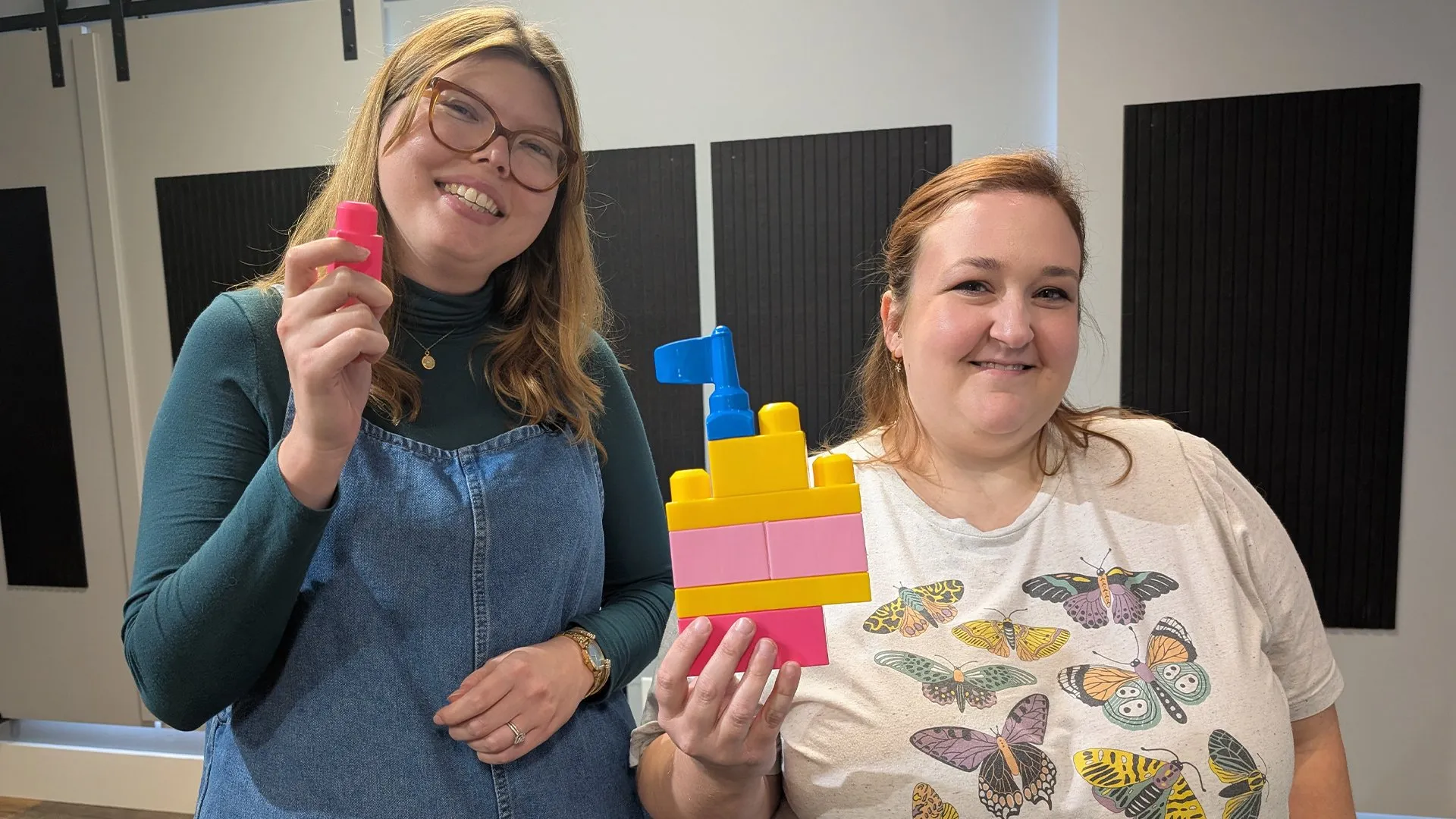
Rodriguez used building blocks as a visual aid to demonstrate the difference. With analytical processing, children build their language by adding individual words together. With gestalt processing, phrases can initially function more like blocks that are stuck together, making it difficult to separate and rearrange the individual pieces.
For parents, recognizing this pattern can help explain why a child may repeat familiar phrases but struggle to use more flexible, functional language to communicate their needs.
Growing Awareness and Understanding
Although gestalt language processing is not a completely new concept, awareness has increased significantly over the past decade. Earlier research began exploring this type of language development in the 1980s and before, but more recent attention has helped develop a better understanding of how to support these communicators.
Rodriguez emphasized that gestalt language processing does not automatically mean a child has a communication delay. Some children move through the stages of gestalt processing quickly and develop effective communication skills without significant difficulty.
However, other children may become stuck in certain stages and benefit from specialized strategies and therapeutic support.
Understanding how a child processes language allows parents, families, and professionals to better recognize their communication needs and provide support that aligns with how they learn.
Free Community Event Coming to Sterling
To help increase awareness and provide practical information, Rodriguez is hosting a free community event focused on gestalt language processing.
The event will take place Friday, November 20th at 6:30 p.m. at Rooted Wellness Center, located at 3101 Freeport Road in Sterling.
During the presentation, Rodriguez will provide an overview of gestalt language processing, explain why understanding it is important, and discuss ways to support children who communicate this way. Families will also learn strategies they can use at home to help children work toward their communication goals.
The event is open to everyone, not just parents and families. Rodriguez also hopes to reach individuals working in medical fields and community-based professions, including police officers and other community helpers.
Having a better understanding of different communication styles can help professionals recognize what may be happening when they encounter someone who relies heavily on familiar phrases or scripts. That awareness can make interactions more effective and supportive.
The free event will include refreshments, opportunities for discussion, and a question-and-answer session.
How to Register
Although walk-ins are welcome, Rodriguez encourages attendees to register in advance so she can get an idea of how many people to expect.
Those interested can call 815-214-9201 and leave a voicemail with the number of people attending. Registration is also available through the event listing on the Facebook page, Katelyn Rodriguez Pediatric SLP.
Whether you are a parent, caregiver, educator, medical professional, or simply someone interested in learning more about how children communicate, the presentation offers an opportunity to better understand a different approach to language development.
By increasing awareness of gestalt language processing, Rodriguez hopes to help families and community members recognize the many ways children communicate and learn how to support them as they find their voices.
Along the Rock is produced by the Radar Free Press. The Radar Free Press is free to the public and relies on community support through likes, shares, and comments.
If you have any questions for recurring guests or episode ideas, please email us at alongtherock@theradar.online.