I was made aware of how much news consumption has changed when I was at a checkout to buy a Sunday paper. A woman behind me said, “Wow, I didn’t know people still bought newspapers.” She was about half my age.
Her comment hit home since I have spent most of my life working for newspapers and magazines as a writer and editor. I even delivered them door to door when I was a preteen. The young woman’s comment struck a nerve.
According to the Pew Research Center (pewresearch.org), about 86 percent of U.S. adults say they get some of their news from electronic devices, such as cell phones and personal computers. According to the Pew Research Center, less than 7 percent of U.S. adults say they got their news from print in 2025.
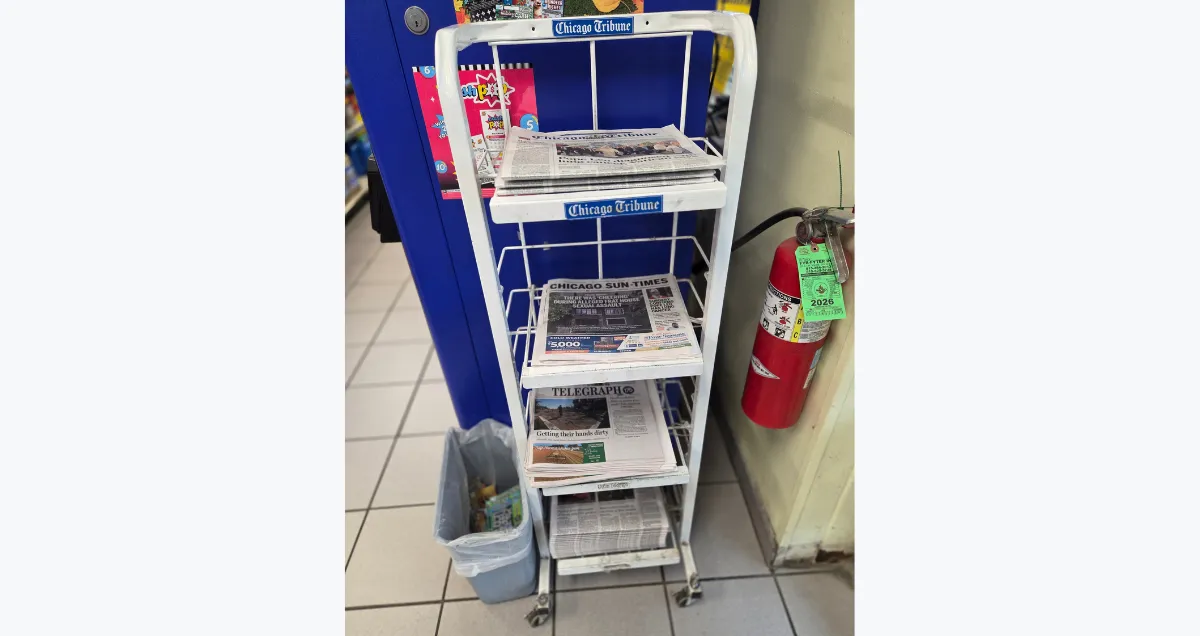
To me, it doesn’t seem all that long ago when our local newsstands displayed papers from the Quad Cities, Rockford, and Chicago. You could also find The Wall Street Journal and sometimes The New York Times. Now, all they have is a few copies.
Like many baby boomers, my relationship with newspapers started early. I remember anxiously waiting to get the funny pages so I could read them while eating my sugar-coated cereal. When I got older, sports became my favorite section to read during breakfast. When I became old enough to work, I would peruse the help wanted ads in the classified section.
In college, I spent part of my Sunday mornings at a greasy spoon that always had several free papers for customers. You might hear someone say, “I have a sports section I would like to trade for the opinion page.” If you stayed long enough, you could read an entire Sunday paper for free. Of course, the paper might have spots of grease and ketchup from being passed around.
All that has changed. Breakfast now means adults are scrolling their phones while the children eat their sugar-coated cereal and try to get their parents’ attention. The greasy spoon I described earlier no longer has newspapers to pass around. Everyone is staring at their screens.
Nowadays, you find very few help wanted ads in the classified section. Job searches are now through websites that specialize in hooking up qualified candidates with employers. Even our local restaurants have mostly stopped posting help wanted ads in newspapers. They are more likely to have a sign on the front door announcing the help they need.
There was a time when the only places to find local news were your local print newspaper and the local TV and radio stations. The plethora of podcasts, news websites, and cable news has made finding the kind you want easy to do.
Will I stop buying Sunday papers? No. I enjoy spreading it out over the coffee table and drinking coffee too much.
And Then Some…
The Sauk Valley has a chance to help its only bookstore, Books on First in Dixon. The owner, Carolyn Chin, is asking residents to vote for the store in the James Patterson Holiday Bookstore Bonus program. The store could win up to $5,000.
To support the area’s only independent bookstore, go to bookweb.org/james-patterson-holiday-bookstore-bonus-program-2026. You can also go to Books on First and use your cell phone to scan a QR code. The last day you can vote is Oct. 29.